In March 2025, I wrote about anticipatory obedience at the Library of Congress, describing how LC fast tracked changes to the Library of Congress Subject Headings relating to the Gulf of Mexico and Mount Denali. When Trump issued an executive order on August 27th directing federal agencies to change Lake Ontario to Lake America, catalogers around the world waited to see how LC would handle the changes. Well, we didn’t have to wait long.
On September 3rd, LC scheduled a proposal to change the subject heading Ontario, Lake (N.Y. and Ont.) to America, Lake (N.Y. and Ont.). On September 4th, LC published an announcement that the tentative changes would have no comment period. On September 11th, the change to “Lake America” was approved and is now the valid heading for LCSH.
As I mentioned in my post last year, the speed with which this happened is astounding—just eight days! The division at LC that makes these decisions, the Policy, Training, and Cooperative Programs Division (PTCP), moves notoriously slowly, which has been a frustration for the library profession for decades. Over the years, they have deferred or declined to take on much-needed projects because of short staffing. But it turns out they can move very quickly when they want to.
While for decades the practice for LCSH changes has included a period of public comment, these most recent changes were approved with no comments allowed—even more drastic than the perfunctory 24 hours of public comment that was provided for Gulf of Mexico and Mount Denali. The Lake Ontario announcement was made with this language:
This tentative list is published without comment period. The proposed changes are made in accordance with Public Law 242-80th Congress, approved July 25, 1947, “to provide a central authority for standardizing geographic names for the purpose of eliminating duplication in standardizing names among the Federal departments, and for other purposes.”
It’s certainly striking to change procedure suddenly after decades and justify it by pointing to a law from 1947!
As Matthew Haugen, Rare Book Cataloger at Columbia, points out in a post on the Cataloging Lab, the head of the PTCP division justified the changes to Gulf of Mexico and Mount Denali in February 2025 by saying “The Library of Congress defers to the United States Board on Geographic Names (BGN) for place names contained within our controlled vocabularies and classification. For more information, please see our Subject Headings Manual sheet H 690 Formulating Geographic Headings and visit the BGN webpage.” Haugen notes that if you actually look at that instruction sheet, it says: “Although the BGN decision, when it is obtained, is preferred over any other name forms for all names other than those of New Zealand, catalogers should also consult other standard authorities.” There are multiple places where LCSH deviates from BGN standards, including using Great Britain instead of United Kingdom. LC could always change their policies to provide more flexibility in their geographic name policies. There’s no reason that LC can’t choose to deviate from BGN in the case of Lake Ontario, except, presumably, fear of retribution.
This week I received a copy of a letter from Sandy Berman (still at his typewriter and sharing out news at age 92) imploring LC, “DON’T DO IT.” Well, they did it, and they certainly stepped with unprecedented energy to fall in line.
A hearty congratulations to the members of the newly formed ALA Workers United (ALAWU)!
In March, employees at the American Library Association announced their intention to form a union, and last week, they voted on that proposal. More than 95% of the employees who voted were in favor of forming the new union. Now that the union has been approved by the members and the vote certified by the National Labor Relations Board, ALA will need to negotiate wages, benefits, and working conditions in good faith with union representatives.
The new union will be part of the American Federation of State, County, and Municipal Employees (AFSCME) Council 31 in Illinois. AFSCME is already home to more than 35,000 library workers across the U.S.
Statements from the new union members have emphasized the need for greater transparency in decision making and for a review of the significant benefit cuts that have occurred in the last few years.
Why It Matters
Since I first joined ALA in 2012, and I’m sure long before that, there’s been much discussion and a good amount of dissatisfaction with ALA’s actions. Library workers have criticized ALA for many things, including membership being too expensive or not having enough benefits, or attempting to silence those who criticize the organization. Much has been made of the fact that it’s the American Library Association, and not the American Librarians Association.
I’ve certainly had difficult experiences within ALA. I co-wrote a chapter that outlines what I would describe to be dismissive treatment and underhanded actions from both ALA members and staff during the multi-year effort to revise the LCSH “Illegal aliens.” When I was laid off, I let my membership lapse, and not entirely for financial reasons. Still, on the whole, I agree with Lindsay Cronk’s perspective that while the complaints are absolutely valid, the profession as a whole is better off when library workers are willing to get involved and fight for change within ALA.
Alongside the new union members, I see the unionization effort as a great step towards positive change within ALA. In 2025, the treasurer of ALA sounded the alarm about ALA’s fiscal health, describing the future of the organization’s finances as “challenging.” ALA’s employees have been bearing the brunt of the “rightsizing” efforts for years now. A fair contract would likely reduce job losses and turnover, providing stability and job satisfaction to ensure workers are able to provide knowledgeable, thoughtful service to ALA members. Union members have called for greater transparency and less top-down decision making not just in the decisions that impact them, but in organizational decisions as a whole. That has the potential to radically shift the way that ALA does business.
What happens at ALA matters to all of us in libraries, whether you’re a member or not. A strong organization fighting for libraries at the national level is a net good for all library workers. Individually, none of us owe ALA our energy or money. But it’s worth considering: in a time when libraries are under sustained attack, would librarians be better off with a secure, stable organization fighting for funding for our workplaces, or with an increasingly shrinking organization, or perhaps none at all?
If you haven’t had the experience of losing your job suddenly, of being laid off or fired, it might be difficult to imagine what it’s like.
The person who has lost their job is probably going through some form of grief. They’re losing financial security, their professional identity, their expectations of a stable future. Much of the same advice applies about things you’d say (or not say) to people grieving the loss of a loved one. Telling people who have been laid off things like “It’s for the best” or “It will all work out” or “One day you’ll look back and be glad this happened” aren’t actually helpful.
Immediately upon losing your job, you’re dumped into a world of unfamiliar paperwork and panic. Trying to make doctor’s appointments before your insurance runs out. Trying to determine who exactly is supposed to be able to afford COBRA coverage. Trying to get your head around the convoluted unemployment process. Trying to figure out how to roll over your 401K. Trying to parse what your severance agreement contract language actually means. Trying to scramble to save things like email contacts, pay stubs, performance records, and all those documents on your institutional Google Drive or SharePoint, before you lose access forever (or maybe they cut off your access immediately, so there’s no possibility of saving these things).
Looking for jobs, especially academic jobs, takes time. When other academic librarians started asking me if I had any interviews lined up just a few weeks after I was laid off, I wondered if they actually remembered how long the academic job search takes. It also takes an immense amount of energy and trust to put yourself out there and be judged by strangers in job applications and full-day interviews.
Because of all of the above, your colleague who has lost their job may not be as communicative as you’d expect. I had people send me well wishes months ago that I still haven’t replied to, because there’ve been times when I only had the capacity to apply/interview for jobs and pretty much nothing else. But it still meant a lot to see that people were thinking about me.
If you’re looking for ways to support a colleague who has lost their job, here are a few places to start.
Offer to meet up with them, in person or online. It’s isolating to no longer have a job to go to. It’s distressing to have coworkers who used to make gestures of caring about your well being, then no longer hear from them when you don’t see them at the office every day. Send a care package or a card. Set a calendar reminder to check in in a month or two, once the initial shock has worn off, and the well wishers have moved on. Stay in touch, even when you’re not sure what to say.
Offer to be a job reference. If you’re coworkers or have worked on projects together, offer to step up as one of their references.
Offer to share job openings. Check in first about what kinds of jobs they’re looking for and where they’re looking.
Offer to write a short endorsement on LinkedIn. These aren’t super important in academic librarianship, but if someone is looking outside academia, they can set a candidate apart.
Offer to look over resumes or cover letters, or to practice interviewing, or to attend networking events with them.
Offer to connect them with people you know. Are there other people you know who have gone through a similar job loss? Are there people in your network who have changed career paths? Are there people you know who the person who lost their job might benefit from talking with? Are they looking for partners for a “funemployment” project or a buddy to take a class to develop new skills? Is there a Discord community that might help them stay in touch with the profession?
Offer to talk about or do something together that’s not related to the job search. Job searching is an absolute drag. Check in to see if they want to vent about it all, or if they’d like a distraction by talking about pets, TV shows, sports—anything but the job search.
Offer reminders of why you appreciate them as an individual. The process of losing your job and looking for another is dehumanizing, and it can be hard to remember what value you have when you’re rejected from multiple jobs. When you check in, tell them exactly why you liked working with them, what they brought to the office or to the profession, what you miss now that they’re not there. Be specific and make it personal, because human resource departments are sending them emails that make them feel like a cog in a machine.
Offer money. If you can afford it, offer to buy them a meal or throw some funds at their Venmo or PayPal. There was a time when it would’ve been considered gauche to offer money to a colleague who had fallen on hard times. Those days are now behind us.
Offer to start a crowdfund campaign. Especially for single people or those with kids, losing your job can mean a lot of fear about how you’ll pay rent or afford health insurance. It can be especially helpful to get a crowdfunding campaign rolling soon after the layoffs, when people are most likely to give, but that’s exactly the time when a person who’s lost their job might not have the capacity to make it happen.
Other actions you might be able to take:
Campaign against layoffs. Are multiple people being laid off? Do they have advance notice? Raise a ruckus!! When four tenured librarians were laid off from St. Cloud State University in 2019, the Minnesota academic library community rallied to support them, creating a Twitter hashtag #SaveSCSU_Library, wearing blue in solidarity, and spreading the word about the St. Cloud State University administration’s actions. At the Minnesota Library Association conference that year, I carried a sign with the hashtag and later another sign reading “Ask me about the St. Cloud State layoffs”—many librarians had no idea they were happening.
Tweet from St. Kate’s Assistant MLIS Program Director Deb Torres (1954–2022), a dearly remembered friend. (source)Tweet posted during the 2019 Minnesota Library Association conference encouraging collaboration on ways to help the laid off St. Cloud State University librarians. (source)
These actions didn’t save their jobs. But they were still worth doing. It’s vital to support our colleagues. It’s crucial to share the word about the value of what we do in librarianship. It’s important to let the next employer who considers laying off their librarians know that that action will result in a lot of pushback and a damaged reputation.
Start a support fund. During the initial wave of Covid, many library workers were laid off, especially public library workers and paraprofessional staff. The EveryLibrary Institute started the HALO (Help A Library Worker Out) fund, raising over $88,000 in funding from individuals along with corporate and nonprofit organizations.
When university staff have been laid off, employees who weren’t impacted can start a fund to provide assistance. Yes, sometimes it feels like we’re all Venmoing each other the same twenty dollars. But it means something to try to help, both to the person helping and the person being helped.
Organize your workplace. With a union, you may be able to fight against layoffs. You can also press for contracts that ensure laid off workers have enough time to prepare for the consequences of job loss.
I’ve now written a series of posts about being laid off (Laid Off, Again; The High Cost of Being Laid Off; Making the Academic Librarian Interview Less Painful); this will be the last one I write about the topic. I don’t have a job offer lined up, but I don’t want to be pigeonholed by writing too much about my experience as someone without a job. It’s also emotionally draining to write about these painful and personal experiences, although I appreciate the kind responses I’ve gotten from readers.
To others who have suddenly lost their jobs in libraries: I see you. I’m rooting for you. If you need to talk to someone who understands, I’m here to listen.
To be unexpectedly unemployed in the U.S. is to be in a state of desperation. If you haven’t been out of work lately, it’s a particularly challenging time. The labor market is cooling, and people are struggling to find work, especially younger workers and people of color. There has been a sharp increase in the number of “ghost jobs,” job listings that never result in a hiring, and the rise in the use of AI means a human may never see your job application.
Since being laid off last August, I’ve gone through fourteen interviews for eight positions at academic libraries. It’s been a mixed bag—at times, it’s felt as though employers didn’t recognize how their actions impacted me. I’d like to share my experience in the hopes that it gets hiring committees to take another look at their process and make some small but meaningful changes.
Some things that made my interview experiences harder than they had to be:
They didn’t tell me how many questions they were asking. If employers don’t provide the questions in advance, sometimes they just start asking questions without letting me know how many questions they have. That means I have to interrupt the speaker to ask, because I have to gauge how much time I have for each answer. Do you have six questions? Do you have twenty questions? Help candidates manage their time well by providing this info up front (preferably in advance).
They didn’t know how many people this position supervised. During two separate interviews, I stumped the hiring committee when I asked how many people I’d be supervising. This seems like something that should be in the job description, to be honest, but if not, the hiring committee should know the answer.
They contacted my references before the interview. I’ve applied for dozens of jobs, so I’m asking for a lot of effort from my references. When employers contact references before I’ve had a chance to decide whether I want that job, that’s wasted time and energy, not only for my references but for the employers as well.
They asked me to travel on Thanksgiving week. Why would you ask a candidate to fly across the country during the busiest travel week of the year? I already had plans to see family.
They expected me to pay hundreds of dollars for a flight and to wait months to wait to receive reimbursement. This is a significant expense for unemployed candidates. At the very least, being clear about when candidates might expect reimbursement is helpful.
They expected me to drive 375 miles in the dark after a full day interview. Interview days are grueling, and this request seemed unsafe to me.
They chose a restaurant without asking about dietary restrictions. This is a basic thing that sometimes gets overlooked.
They booked my travel through a system that automatically signs me up for spam emails. The employer probably doesn’t even know this happens, but it was frustrating nonetheless.
They didn’t ask whether I had accessibility concerns. Honestly, no employers are doing well on this metric. No employer asked about captioning for Zoom meetings. No employer asked about on-site accommodations I might need, whether that’s wayfaring or travel to different campus buildings. I feel very bad for my fellow candidates who need accessibility accommodations and have to make difficult choices about whether they’re seen as “a problem” for asking for them. Why not show that you’re aware that people have different needs by asking what candidates need up front?
I pushed back on some of the requests I received because I thought they were unreasonable. But it’s not kind to expect candidates to push back when they may desperately need this job.
Some things that made my interviews less painful:
They provided the questions in advance. Honestly, this is the easiest thing you can do to not only make candidates more comfortable and successful in sharing their experience, but to equal the playing field. Unless the job duties in the positions I’m interviewing for require being good at on-the-spot responses, there’s no reason not to provide questions in advance.
They shared with me in advance who would be at each meeting. That information means I’m able to research people and tailor my answers for the audience I’m speaking to.
They provided a campus tour and information about the students at their school. It makes a big difference when employers provide opportunities for me to learn more about the environment I’m considering joining.
They let me know by phone call when I didn’t get a job. I appreciated the consideration.
They invited me to meet with them to get feedback on my candidacy when I didn’t get the job. I was grateful to get the chance to meet with the library dean to hear the reasons they didn’t select me; it means I have a better chance at finding a successful fit in the future.
So much of interviewing is about building trust and understanding—that old chestnut that we’re interviewing each other to ensure a good fit is true, but employers don’t always acknowledge that. The job search is inherently demoralizing and difficult; consider making changes in your workplace processes that make it less dehumanizing.
As I mentioned in my last post, I was laid off from my job as a librarian at Northwestern University in July, along with 200 other employees.
I’d like to take the opportunity to write about the costs of being laid off, from an employee perspective. Northwestern hadn’t discussed the possibility of layoffs after the Trump administration withheld federal funding, and I didn’t imagine I’d be laid off from a university without warning. The emotional costs are just as difficult as you’d expect, but the financial costs may not be as clear to those who haven’t gone through this experience.
My insurance coverage ended in September. I straight up wouldn’t have been able to afford COBRA to continue my job’s insurance policy; it would’ve cost me over $800 a month. Luckily, my spouse has been able to pick up the significant extra cost of insurance coverage for me.
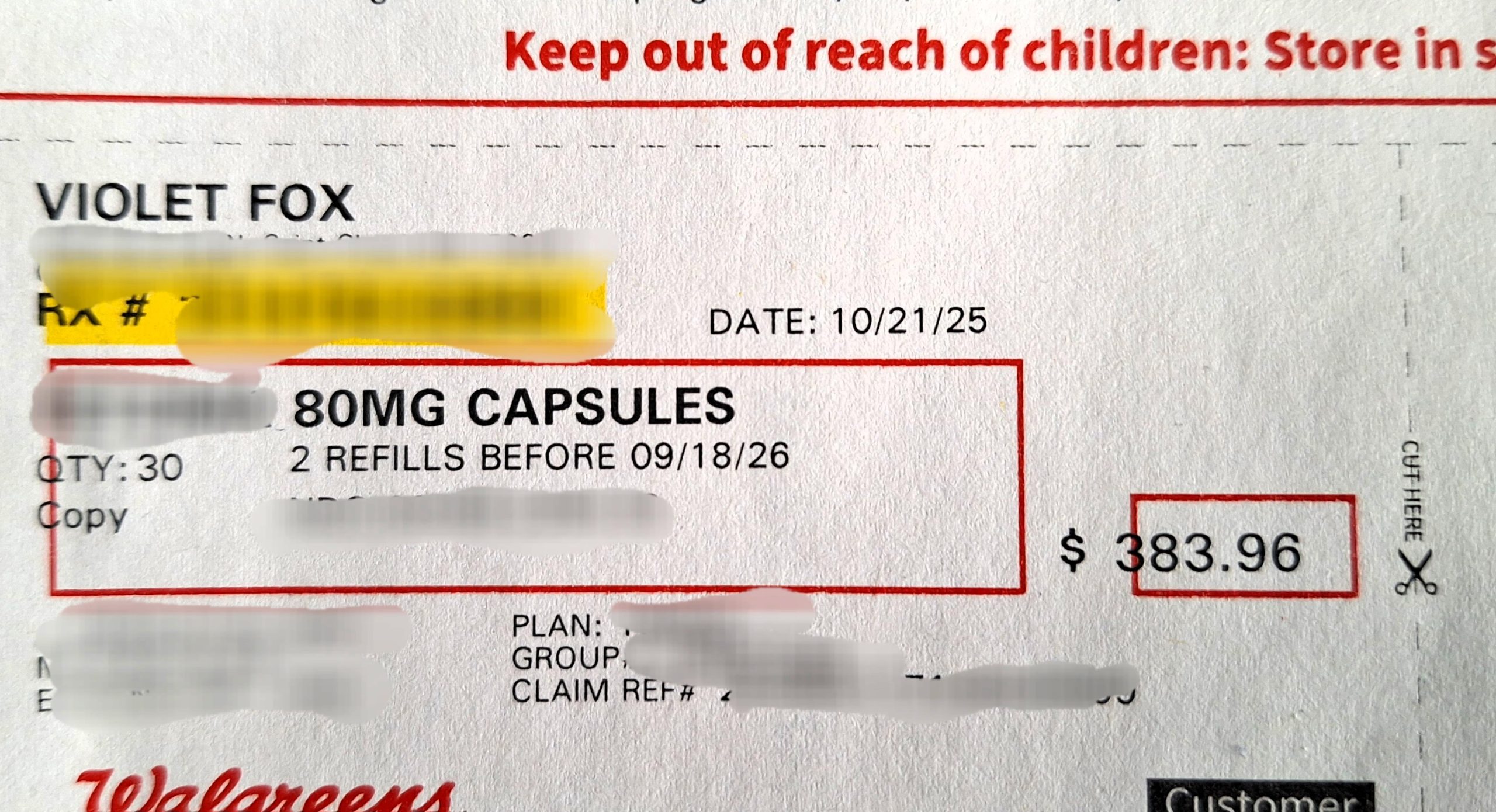
A new insurer means new hassles in getting my prescriptions. A prior authorization request for the antidepressant that keeps me alive meant a week of being stuck in prescription drug limbo, calling my pharmacy, then the insurance company, then the prescriber, then back to the pharmacy, and the prescriber again, and the pharmacy again, and the prescriber again, and finally a last trip to the pharmacy. At last I was able to pick up my prescription! Unfortunately, my spouse’s insurance isn’t as good as what I had before, so my payment for 30 days of this drug is $383.96.
Adding to the financial stress is that I’m in an unusual situation, in that I live 500 miles apart from my spouse. That has its ups and downs. While I’d much prefer to live with him, we struggle with the two-body problem, in that it’s difficult to find two cataloging librarian jobs in the same city. I’ve lived in Chicago for three years now, and I’m not sure whether I should stay in Chicago and try to find a job here, or move back in with him in Minnesota until I find something. While I make a few hundred dollars each week through unemployment and my part-time adjunct job, it’s not enough to cover rent. But it would be a $2,500 penalty fee to break my lease, which isn’t up until May. Should I wait until I find a job that might pay my moving expenses? Moving once is expensive enough, but moving back to Minnesota and then to another state for a job would double the costs. The unknowns are maddening, and the combination of despair and uncertainty makes it hard to make decisions.
I’ve heard at other universities there was a crowdfunding effort to support those who’d been laid off. That didn’t happen for me or the other Northwestern employees I was laid off with. Everyone of good heart here in Chicago is discouraged and anxious about the relentless kidnapping of our immigrant neighbors off our streets. My experience is just one of the many people hurting because of political choices made by those with power. This is living in the U.S. in 2025, and there are more nightmares to come.
Writing about this very personal topic isn’t easy. I’d rather be writing about cataloging, or —hell, even writing about AI, which if you know my thoughts on AI, is really saying something. Honestly, I’d rather just lay low and not talk to anyone until I get a new job, although I’m sincerely worried that will take a long time. Some days I’d rather just disappear altogether. But I’m writing about it here, in this space, because I think layoffs are going to become a more prevalent experience for academic librarians. As always, we need to cultivate solidarity with each other to survive. If you’re reading this after going through something similar, now or in the future, I encourage you to reach out, I’d be happy to talk.