Laid Off, Again

On July 29th, I was enjoying a week of vacation, spending time with my spouse’s family in South Dakota. I got an out-of-the-blue text message asking me to join a meeting with my library’s director and human resources. Having been in this situation before, I knew what was coming—I was being laid off. 

The Story Behind the Layoffs

More than 200 of my coworkers at Northwestern University were laid off that day. Ten percent of my library’s staff were laid off. In April, the Trump administration froze $790 million in federal grants to Northwestern, because they claim Northwestern violated Title VI of the Civil Rights Act in not providing a harassment-free environment for Jewish students. To be clear, the Trump administration doesn’t care about Jewish students—if they did, they wouldn’t have appointed people who spout antisemitic rhetoric to positions within the administration. 

The White House continues to extort universities by freezing their federal funding and demanding campus reforms including government oversight of academic decisions and punishing fines. Weaponizing claims of antisemitism by universities with prominent protests over the Gaza genocide is a convenient tool for an administration that seeks to undermine academia. At the same time, it hurts the Jewish community by exploiting their very legitimate concerns about rising antisemitism from the right.

John Oliver’s most recent episode of Last Week Tonight, “Trump vs. Higher Education,” does a good job of laying out the issues, as well as correctly identifying Columbia as “the little bitch university” for immediately giving into the Trump administration’s demands (which did not stop additional demands for more government control over admissions and academic departments). Northwestern didn’t cave in quite the same way, but did take the administration’s claims of antisemitism at face value, implementing new policies (such as requiring students to remove face masks when requested) and new mandatory antisemitism training.

Northwestern’s federal funding is still frozen. Is it reasonable to think that my layoff is part of standing up to the administration? I’d like to think it means something, instead of just being arbitrarily cruel. But Northwestern certainly isn’t framing it that way, saying that the layoffs are “in response to more than just the federal research funding freeze. These include rapidly rising healthcare expenses, litigation, labor contracts, employee benefits, compliance requirements and a suite of federal changes, such as potential constraints on our ability to enroll international students, as well as likely reductions in research Facilities and Administration reimbursements and in overall federal research funding.” 

Once Again, Into the Breach

This is my third time being laid off. The first was in 2008, while I was working for Bank of America, as a result of the 2008 financial crisis. My department’s last six months included training our replacements in India. In October 2020, I was laid off from OCLC, due to their fears about the impacts of COVID on higher education (their largest clients). I’d tell you more about how terrible that situation was, but OCLC required me to sign a non-disparagement contract in order to get any severance pay. In 2023, the National Labor Relations Board ruled the inclusion of non-disparagement clauses in severance agreements was no longer permitted, but who knows what will change under this administration.

 Now, in 2025, I’ve been laid off again. I’m devastated, of course. I liked my job, and I was good at it, with three years of “excelling” performance reviews. I received four weeks of severance pay, and I’m adjuncting, so I have a little money coming in (about $400 a week). Unemployment will supplement that for a while, with an extra $200 a week. I’ll get a deferment on my student loans, which, as I shared in my last post, were about to rise to a monthly payment of $1,242, but my progress towards loan forgiveness now grinds to a halt, again. And the job search begins anew.

I still think of myself as one of the lucky ones, since I’m married and I’ll be able to join my spouse’s insurance after my Northwestern insurance runs out this month. I know that I’m lucky to have had a decade to build my experience; I don’t envy the new MLIS graduates who are looking for increasingly harder-to-find jobs in higher education. I’m extremely grateful for the support of many people in the profession.

But I have to admit—I’m afraid. And I wish this suffering meant something, other than just being the latest in a series of things getting worse, for me and for everyone I care about.

On Owing $93,605 in Student Loans; or, A Profession Built on Debt

I don’t know the right metaphor to make you understand how this much debt physically feels. What it actually feels like is a pressure on my chest and shoulders, but maybe that’s not evocative enough. What if I describe it as an anchor trailing behind me? Or being covered in molasses, trapping my energy and restricting my movement? Perhaps as a ghost, haunting me continuously since I took out my first student loan in 1995.

Many people working in U.S. libraries are impacted by student debt. Many of those working in academic libraries are working towards paying off their student debt through the Public Service Loan Forgiveness (PSLF) program, which allows people working in government and non-profit institutions (like most colleges and universities) to have the remainder of their balance forgiven after making ten years of payments (that is, 120 monthly payments). I’m sharing my experience as an example of what’s happening now to someone who has a good paying job and has been lucky and privileged in many ways.

PSLF Problems

Over the past year, the repayment plan I’m on, SAVE (Saving on a Valuable Education) plan, was blocked by a U.S. appeals court, which ruled that Biden did not have the authority to implement the plan. That has meant that I have been unable to make progress on paying off my student loans—more precisely, if I made payments, they would not count towards my goal of 120 payments for student loan forgiveness.  

This week I attended a webinar hosted by Public Service Promise, an organization founded in 2019 that helps eligible public servants achieve student loan forgiveness. If you’re working through the PSLF program, I encourage you to check out their resources and their free webinars providing updates about recent developments. During the webinar, I learned that some of the backlog in processing requests to move to a different payment plan has been reduced, so it might be a good time to resubmit my request to move to a different payment plan, before interest begins reaccumulating on August 1st. I submitted a request and learned that my new student loan monthly payment will be $1,242. 

I don’t know about you, but I don’t actually have an extra $1,242 lying around, so that’s going to be a real struggle to come up with every month—that’s nearly as much as I pay in rent for my 300-square-foot studio apartment. Under the SAVE plan, I was paying around $450 each month.

I currently have 95 PSLF-eligible payments toward the 120 necessary for forgiveness of my $93,605 balance. I expected to be further along in this process; the 12 months I’ve been stuck in limbo because of the Republican-led lawsuits against the SAVE plan have set me back. It’s possible that I’ll be allowed to use the PSLF Buyback program, which, once I have 120 months of qualifying employment, will allow me the opportunity to make a lump sum payment of around $14,000 to retroactively make those 12 months PSLF eligible. If I can come up with $14,000 all at once (I’m lucky enough to have family members I can borrow from), I might reach that 120 payment mark and apply to have my loans forgiven in September 2026.

Potential Political Interference with PSLF Eligibility

A potential snag is that the One Big Bullshit Bill allows for the possibility of institutions to be cut off from PSLF eligibility if their activities have “substantial illegal purpose,” as defined by the Trump administration (read more about this “negotiated rulemaking” provision). The Department of Education (or what’s left of it) is now working on a set of rules to be implemented by July 1, 2026 that may declare universities to be no longer PSLF eligible if they, for example, provide gender-affirming health care to transgender youth, or provide services to undocumented immigrants. My employer is one of many that have been targeted by this administration’s attacks on higher education. So it’s possible my student loan payments will no longer be deemed PSLF eligible just before I reach the magic number of 120 payments. And, in a nightmare scenario I’m refusing to let myself consider, the Department of Education may decide that all my former payments from my employer are no longer PSLF eligible.

Since PSLF was created by an act of Congress, and statutes define PSLF-eligible organizations as every federally-defined nonprofit organization, it would seem as though the Department of Education doesn’t actually have the legal authority to exclude organizations that are doing things the presidential administration doesn’t like. So there will be legal challenges to these rules, if they are implemented. But as we’ve seen, the judicial branch has struggled to keep up with the actions of this administration.

Student Loan Restrictions for New Students

If this is the scenario for people who already have loans, what’s the situation for new students? As you might imagine, the Republicans’ spending and tax bill isn’t good news for folks who are coming into school after July 2026, with tighter borrowing limits and dramatically reduced repayment options. Graduate students will be capped to borrowing $20,500 a year. I went to grad school twelve years ago, and even then, working several part-time jobs at a time while attending school, I couldn’t have paid both tuition and rent on that amount of money. LIS students who don’t come from a solidly upper- or upper-middle-class background will either need to take out expensive private loans or will just not be able to attend grad school. 

So what now? I don’t know. I know that some library workers have banded together to create scholarships to help defray the cost of attending library school (“Texas Exes iSchool Alumni Scholarship for BIPOC Students”). There are also organizations that are looking to create mass movements to push politicians to cancel student debt, such as the Debt Collective.

As for me and the student debt that’s been haunting me for thirty years, I’ll be fine—as I said, I’m one of the lucky ones. I share my story with worry for our colleagues, present and future, who are not so lucky.

Image of a Ghost Produced by Double Exposure (1899). Via the National Archives on Flickr: https://www.flickr.com/photos/nationalarchives/10594484016/in/photostream/

AI Refusal in Libraries: A Starter Guide

This week I was on a panel at the Generative AI in Libraries (GAIL) virtual conference. Along with my fellow panelists Andrea Baer and Emily Zerrenner, I joined moderator Sarah Appedu to discuss the cognitive dissonance that we recognize between the widespread exhortations to adopt GenAI tools in libraries and the harms that we see in the usage of these tools. The panel was well attended and well received, with the most frequent comment we received in the chat was that attendees hadn’t heard about the concept of AI refusal before. 

AI refusal can refer to a spectrum of approaches to AI, whether that’s refusing to use AI tools entirely, refusing the use of AI as much as possible, refusing to prioritize the use of AI, refusing to accept either boosterism or doomer narratives, refusing to accept the idea that AI is inevitable, or some other refusal. It can also refer to more cheeky ways of refusing AI, such as using scare quotes around “artificial intelligence” to indicate disbelief that these tools are actually displaying intelligence (hat tip to librarian Dave Ghamandi!).

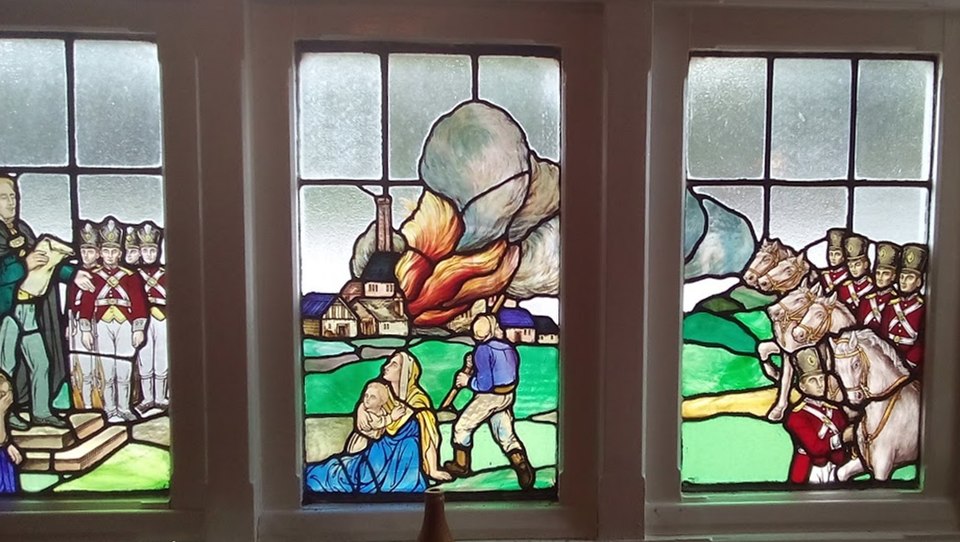
Stained glass window in the Windmill public house, Westhoughton, England, representing the Luddite attack on Westhoughton Mill. Source: Wikimedia Commons

Many readings were suggested in the chat during our panel presentation. If you’d like to learn more about AI refusal, in libraries and beyond, here are some approachable, mostly non-scholarly resources I recommend. As our moderator Sarah Appedu emphasized, it’s vital to read and learn across disciplines on this topic, so we’re not siloing our discussions at this crucial moment.

Zines

  • Shard volume 31 by Thomas Vose (2024). Subtitled the “A.I. in Libraries” issue, Vose discusses the disconnect between library values and AI adoption. He asks readers “Who benefits? Who suffers?” 
  • AI Is Very Bad, Actually: A Manifesto by Julie Setele (2024). Using just one sheet of paper, librarian Setele lays out their primary qualms with GenAI, including their distate of the way it’s integrated into everything and framed as “magic.”
  • A Librarian Against AI; or, I Think AI Should Leave by Violet Fox (2024). My 32-page zine has been popular especially with library school students. I use the ALA Code of Ethics as a starting point to discuss how using AI tools is antithetical to several of the stated values of librarianship and share potential approaches to AI refusal.

Blog posts and news articles

  • Saying No to AI in Education by Allie Lopez on the blog Front Porch Republic (2024). Lopez describes the impact of educators and professionals uncritically adopting technology on the students they serve and argues against the passive acceptance of AI in educational settings.
  • AI in Academic Libraries (part 1: Concerns and Commodification; part 2: Resistance and the Search for Ethical Uses) by Ruth Monnier, Matthew Noe, and Ella Gibson, published in the College & Research Libraries news column (2025). Librarians Monnier, Noe, and Gibson discuss their doubts and concerns about AI use in libraries.
  • The People Refusing to Use AI by Suzanne Bearne at the BBC (2025). I despise the framing of this article, in that the AI ethics expert states it’s too late to opt out of using AI (that’s true for certain AI tools, but certainly not all). Interesting to note that it features a series of women describing their approaches, then a man saying they’re all wrong (!). But if you need more proof that this is a newsworthy topic even outside of academia, here you go.

Guide

  • Refusing GenAI in Writing Studies: A Quickstart Guide by Jennifer Sano-Franchini, Megan McIntyre, and Maggie Fernandes (2024). I’ve come back to this guide frequently in considering what AI refusal looks like. The authors describe “ten premises that ground refusal as a disciplinary response to GenAI technologies,” many of which are rooted in ideas also discussed in LIS scholarship.

Popular books 

  • The AI Con: How to Fight Big Tech’s Hype and Create the Future We Want by Emily M. Bender and Alex Hanna (2025). An enjoyable, informative read! I especially love their “strategies for popping the hype bubble” section, which include AI refusal methods as a consumer and as a worker.
  • Blood in the Machine: The Origins of the Rebellion Against Big Tech by Brian Merchant (2023). You’ll note that many discussions about AI refusal grapple with the history of the Luddites, especially as that term is frequently used as a pejorative to describe anyone supposedly fearful of new technologies. This book is a great introduction to the real history of the Luddites and the parallels between their story and the current day environment of the gig economy and tech industry overreach.
  • Resisting AI: An Anti-fascist Approach to Artificial Intelligence by Dan McQuillan (2022). If you’re looking for a more in-depth political approach to AI, McQuillan lays out the case for why GenAI is inherently anti-worker, leading to a more precarious state for those on the margins.

Podcasts

  • Everyone’s Writing with AI (Except Me!) by Maggie Fernandes and Megan McIntyre (2024–present). Writing studies scholars and coauthors of the quickstart guide mentioned above, Fernandes and McIntyre discuss what they’re reading and invite guests to talk about the harmful impacts of AI.
  • Mystery AI Hype Theater 3000 by Emily M. Bender and Alex Hanna (2022–present). I appreciate the approach from Bender (a linguist) and Hanna (a sociologist) in examining the hype that powers the impetus to adopt AI immediately. A wide range of topics and guests keep these episodes from feeling repetitive.
  • Better Offline by Ed Zitron (2024–present). Zitron rants about the “rot economy” of the tech industry. If you want to learn more about the economic basis of the business models behind companies investing in AI, this is a great place to start.

Discord server

  • Alliance for Refusing Generative AI (2025) founded by Cara Marta Messina, Stacy Wittstock, Kat Gray, Maggie Fernandes, and Megan McIntyre. A community space for discussing AI refusal “in writing studies, the humanities, and beyond.”

Keep an eye out for the writings of my copanelists, Sarah Appedu, Andrea Baer, and Emily Zerrenner, who all have such insightful things to add to the conversation—I’m grateful for their inspiration. I encourage everyone to learn more about GenAI from critical sources. Keep learning, keep sharing!

Targeting Books for Removal at U.S. Military Libraries

screenshot of the header of the "Memorandum for senior pentagon leadership, Commanders of the Combatant Commands, Defense Agency and Department of Defense Field Activity Directors." The subject line reads "Reviewing the department's military educational institution library collections" and it is dated May 9, 2025.
The memorandum directing military college libraries to review books for “divisive concepts.”

In the course of looking for resources relating to critical cataloging, I stumbled on a new memorandum from the U.S. Office of the Secretary of Defense, dated May 9th and titled “Reviewing the Department’s Military Educational Institution Library Collections.” The memorandum directs the military schools and academies under the Department of Defense to use a provided list of Library of Congress Subject Headings (LCSH) to flag any books that are described with those subject headings, with the intent to identify, sequester, and potentially dispose of those books. The intention of this review is to remove educational materials at the schools “promoting divisive concepts and gender ideology [that] are incompatible with the Department’s core mission,” which is “providing the military forces needed to deter war and ensure our nation’s security.”

This list of subject headings was created by a “temporary Academic Libraries Committee (ALC), comprised of knowledgeable leaders, educators, and library professionals drawn from across the Office of the Secretary of Defense and the Military Departments” who will do the work of reviewing books and potentially removing them because they aren’t aligned with the viewpoint of the Trump presidential administration.

The subject headings listed are: 

  • Affirmative Action Programs — Law and Legislation — United States 
  • Affirmative Action Programs — United States
  • Affirmative Action
  • Allyship
  • Anti-Racism — United States
  • Critical Race Theory
  • Discrimination — Law and Legislation — United States
  • Diversity in the Workplace — United States
  • Diversity, Equity, and Inclusion
  • Gender Affirming Care – United States
  • Gender Dysphoria
  • Gender Expression
  • Gender Identity — United States
  • Gender Nonconformity
  • Gender Transition
  • Transgender Military Personnel — United States
  • Transgender People — United States
  • Transsexualism — United States
  • Transsexuals — United States
  • White privilege (Social structure)

As a cataloger, it’s painful to see LCSH used to do this dirty work, to limit rather than expand access. As someone who has worked to increase access to materials relating to underrepresented populations, it’s particularly painful that some of the headings listed are newly established in the last few years. For example, the LCSH Allyship was established in 2023. I personally worked with a group of wonderful MLIS students to revise the subject headings for Gender transition (before 2020, this subject heading was established as Sex change). The subject heading White privilege (Social structure) has a notably long history of being proposed and rejected by the Library of Congress, with attempts being made to establish it in 2011 and 2016 before it was finally accepted in 2022.

Since the 2020 uprisings after the murder of George Floyd, a groundswell of catalogers has invested their time and energy into an often frustrating task—working to improve subject headings. This work is slow, exacting, and unglamorous (even by the standards of definitionally unglamorous cataloging work!), but the catalogers who do it find it worthwhile because we know the provision of accurate, up-to-date, respectful terminology will help library patrons find the information they need. We see it as our responsibility to bring together information about topics that are sensitive or frequently challenged. We take heart in the many stories of people finding books about their own identity on the library shelves, their discoveries facilitated by the careful work of catalogers. (For just one such story, see Alison Bechdel’s searching her college library’s card catalog for Homosexuality in Fun Home.)

Strikingly, the memorandum claims that the committee reviewing the books flagged with these subject headings “will take a viewpoint neutral approach and apply the definitions of ‘discriminatory equity ideology’ and ‘gender ideology’” from Trump’s executive order withdrawing federal recognition for transgender people. Of course, nothing could be less “viewpoint neutral” than investing in the Trump administration’s twisted philosophy of gender essentialism and targeting the principles of diversity, equity, and inclusion. 

The memorandum goes on to claim that the committee’s work “uphold[s] the principles of intellectual freedom necessary to educate military leaders ready to fight and win the Nation’s wars.” Librarians, is this your definition of intellectual freedom? 

Anticipatory Obedience at the Library of Congress

Editor’s note: We are pleased to welcome Violet Fox to the ACRLog team. Violet is a Cataloging & Metadata Librarian at Northwestern University’s Galter Health Sciences Library. She is the creator of the Cataloging Lab, a wiki designed to encourage collaboration in library metadata. Violet is passionate about critical cataloging, zine librarianship, and promoting the mental health of library workers. 

On February 18, the Library of Congress (LC) sent an email announcement through its regular channels about a special list of revisions in the Library of Congress Subject Headings (LCSH). This list contained 45 proposed revisions to LCSH relating to Trump’s Executive Order 14172 “Restoring Names That Honor American Greatness.” These revisions would change the LCSH for Gulf of Mexico to America, Gulf of, and would change the LCSH for Mount Denali back to McKinley, Mount (Alaska).

Geographic names in LCSH generally follow the form of name decided on by the US Board on Geographic Names, a body under the Secretary of the Interior. (This relationship is laid out in the LC Subject Heading Manual instruction sheet H 690 Formulating Geographic Headings.) The Board on Geographic Names takes its cues from the State Department, taking into account which countries the US has recognized.

It was not surprising that LC would follow the example of the US Board of Geographic Names, as that’s standard operating procedure. What wasn’t standard was the speed at which this revision was pushed through. Although the special list was backdated to February 13th, no one was notified of these revision proposals until the morning of February 18th, and the deadline for submitting comments was the same day, February 18th. This meant that catalogers had less than 24 hours to respond to these proposals, and our international colleagues in earlier time zones had no opportunity to respond to these proposals. The regular procedure for revisions to LCSH includes a three week comment period, which provides the chance to point out errors or potential conflicts. The proposed changes to the Gulf of Mexico and Mount McKinley headings were fully implemented in the authority file in mid-March.

Those of us who regularly propose revisions to subject headings know that the turnaround time for those proposals is usually a few months, and can take six months or longer for more complex revisions. For those of us who remember the more than five years of LC dragging its heels in making revisions to the Illegal aliens LCSH, the speed at which this change occurred was astonishing. 

We don’t know if LC was quietly given instructions to revise these headings by Congress members, or if LC leadership independently decided they wanted to show fealty to the Trump administration and avoid political pushback. Either way, the decision to not just implement these terms but to fast track the changes negates the principle that LCSH should represent the most commonly used terminology to ensure the discoverability of resources. By making these changes, LC has pushed the responsibility of reflecting common usage onto every single library using LCSH, which now must make the decision of what headings to use in their catalog (that is, if they have the capacity to locally revise headings in their catalogs—not all libraries have the technological or staffing capacity to do so).

Without any formal directives announced, I believe we can reasonably label LC’s actions as anticipatory obedience, the concept developed by historian Timothy Snyder describing actions aligning with perceived expectations before explicit directives are given. We can imagine why LC might have made that decision. In a February New York Times opinion piece, The Chilling Consequences of Going Along With Trump, M. Gessen describes some of the arguments for compliance with authoritarian requests, including the idea that one must pick one’s battles, or that not complying is not worth risking people’s jobs. 

Still, the fact remains that these domineering name changes are now reflected not only in many US catalogs, but in library catalogs across the world. Power has been taught that even if they’re not looking very closely, the Library of Congress will change its vocabularies to reflect the capricious whims of the president, no matter how euphemistic or jingoistic. 

In the 1930s, future Librarian of Congress Archibald MacLeish wrote about the rise of anti-communism: “The real struggle of our time was not between communism and fascism but the much more fundamental struggle between democratic institutions on the one side and all forms of dictatorship, whatever the dictator’s label, on the other.” Does our current Librarian of Congress have as much strength of conviction?

The main building of the Library of Congress, a neoclassical building, as seen from several floors up on the building next door.
The Library of Congress Jefferson building, as seen from the Madison building.
Photo credit: Violet Fox